Dashboard Library
Introduction
The Dashboard Library is the main place in the application where you can browse, preview, and manage dashboards.
Each dashboard is made up of one or more boardlets — reusable interface blocks that are created and configured using the App Composer.
The Dashboard Library only shows dashboards for the current app context.
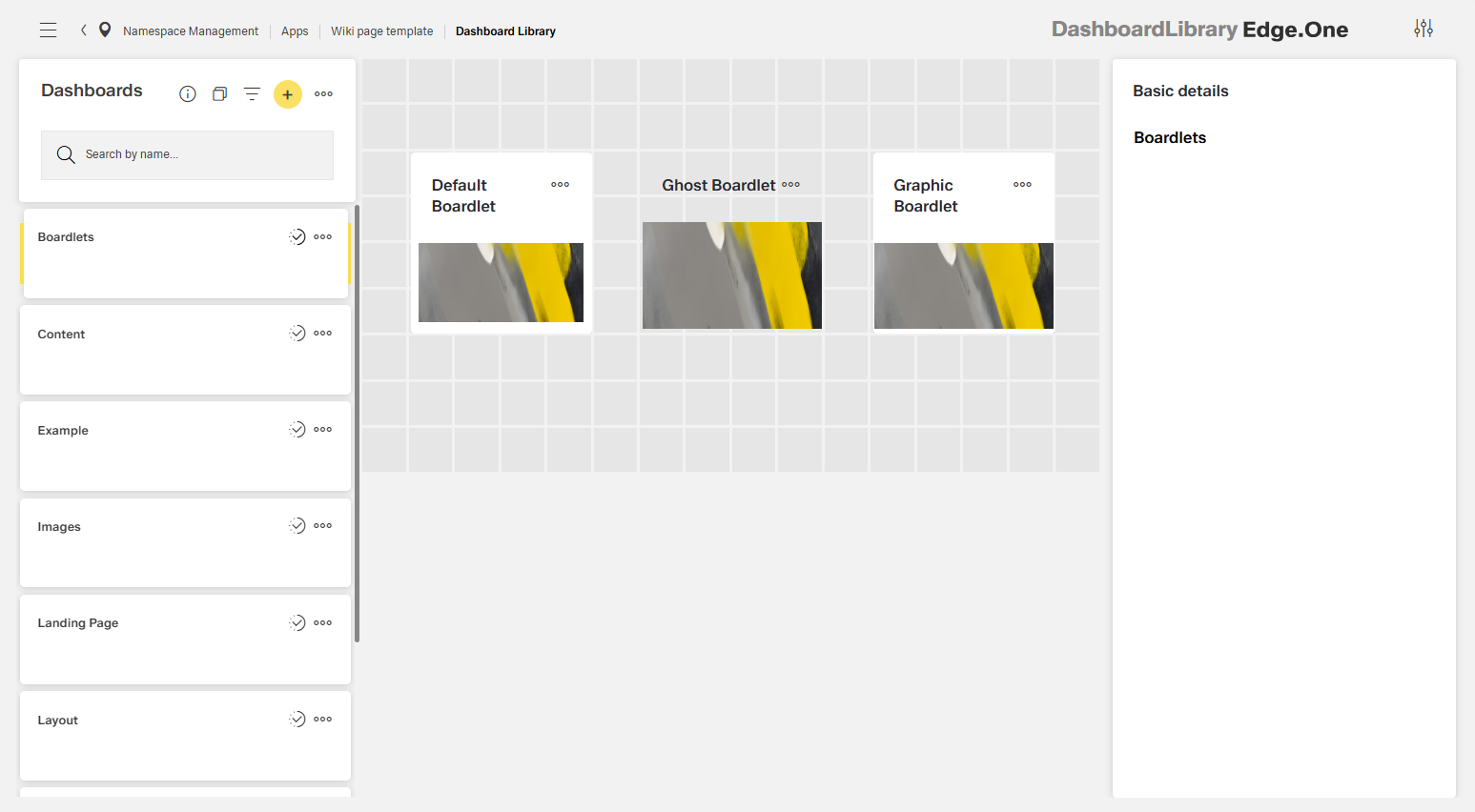
This view is divided into three main sections:
- List of Dashboards – Displays all dashboards of the current app context.
- Dashboard Preview – Shows a read-only preview of the selected dashboard.
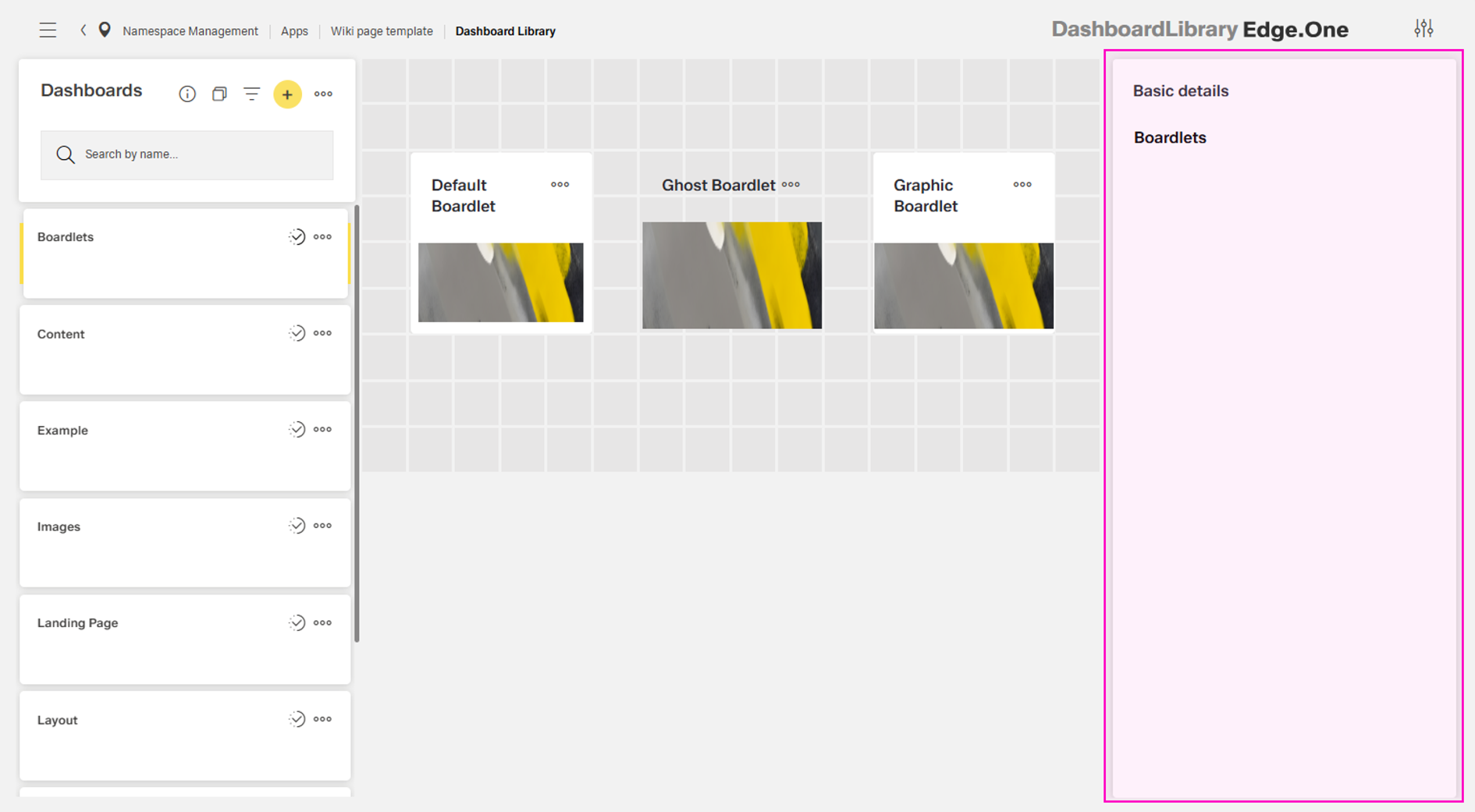
- Basic Details – Displays basic details of the selected dashboard .
With the Dashboard Library, you can:
- Search and organize dashboards
- Create, edit, duplicate, delete dashboards
- Export and import dashboards between contexts
- View dashboards in a structured way
List of Dashboards
The left panel contains a list for all dashboards within the application context.
At any time, one dashboard is selected (unless no dashboards exist in the current app context). When the page is opened, the first dashbord in alphabetical order is selected by default.
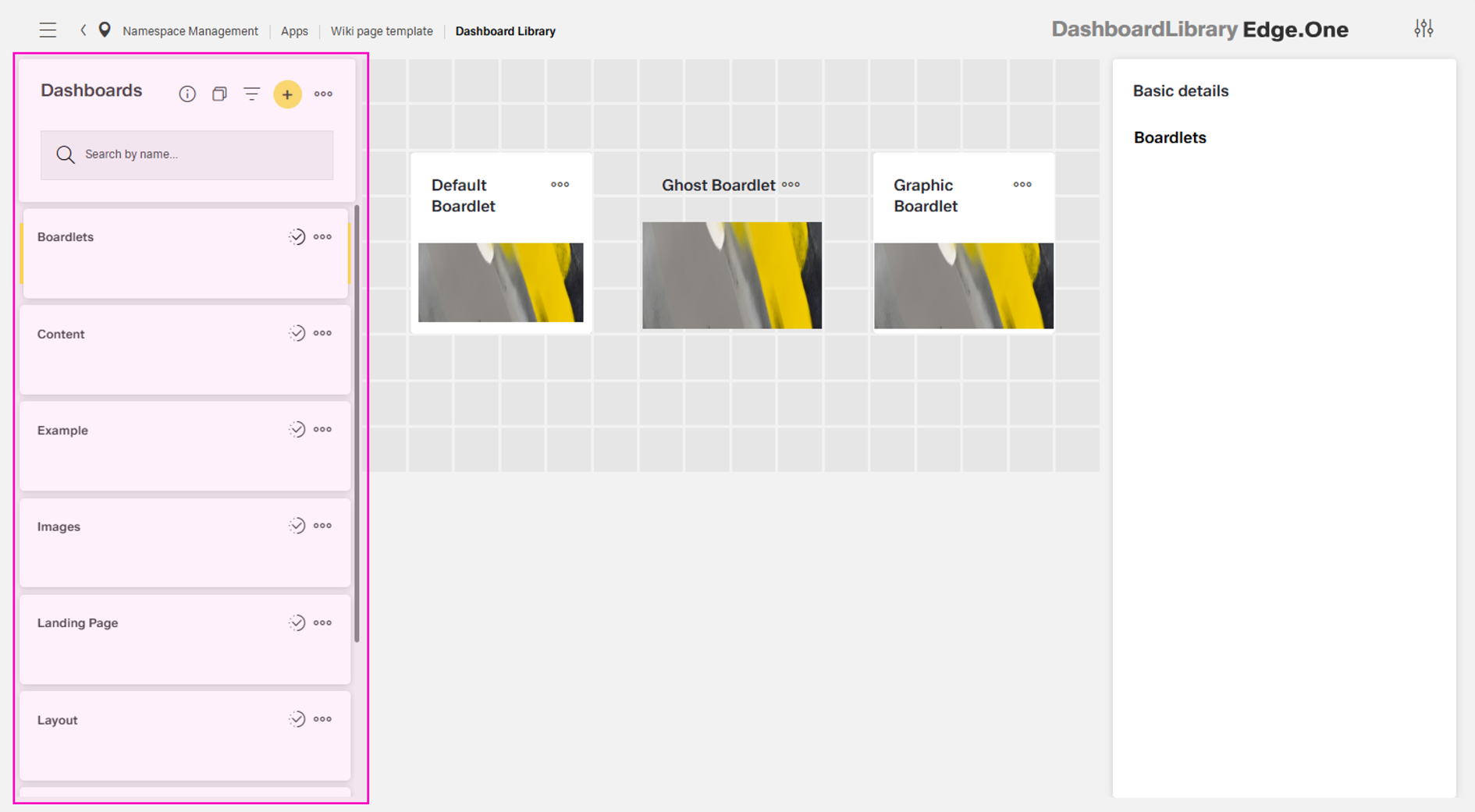
This section supports the actions described below.
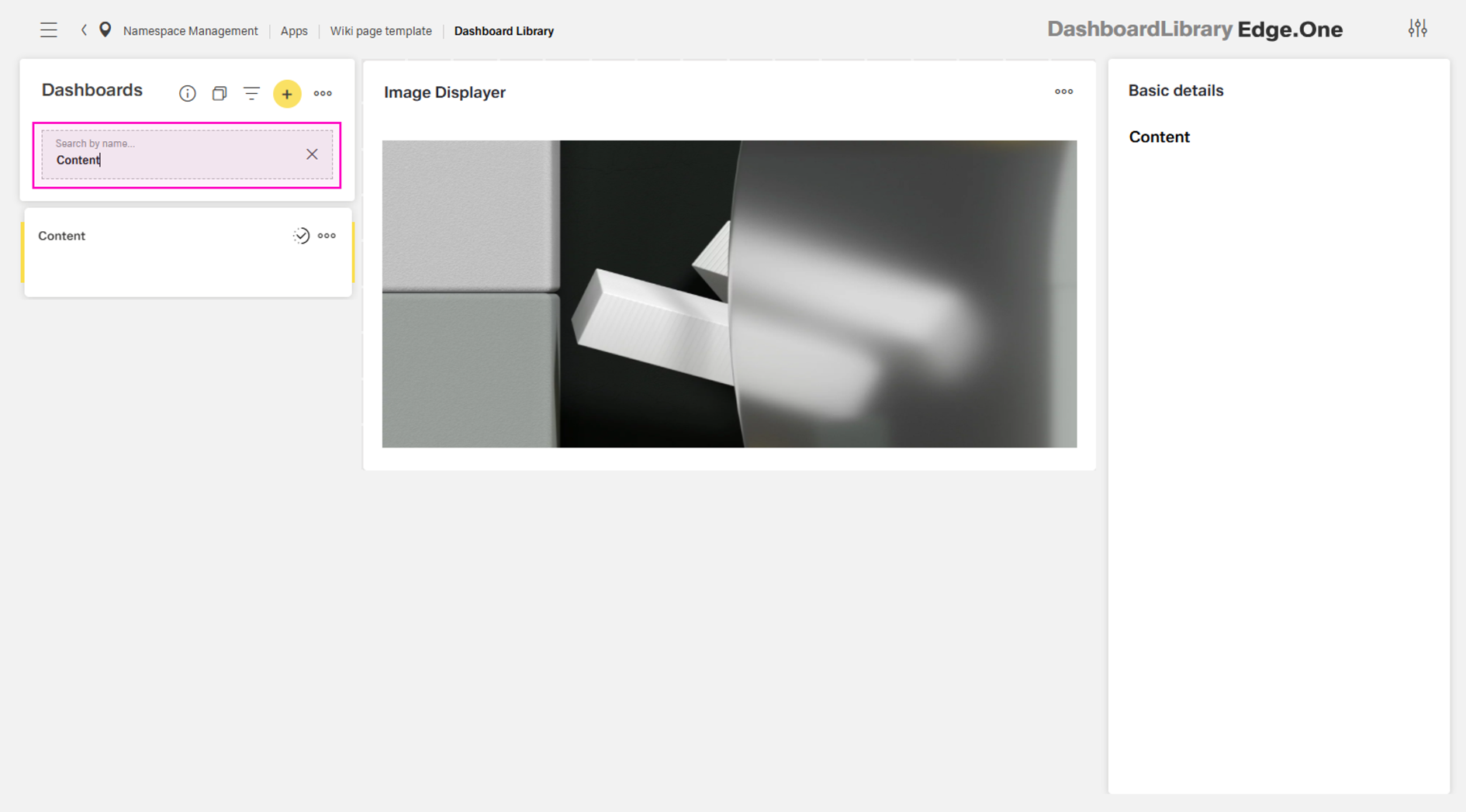
Search
The Search by name… field filters the list by boardlet title. Capitalization is ignored.
Create New Dashboard
A new dashboard can be created via the Add action in the header. A dialog is opened where a (preferably unique) name is entered.
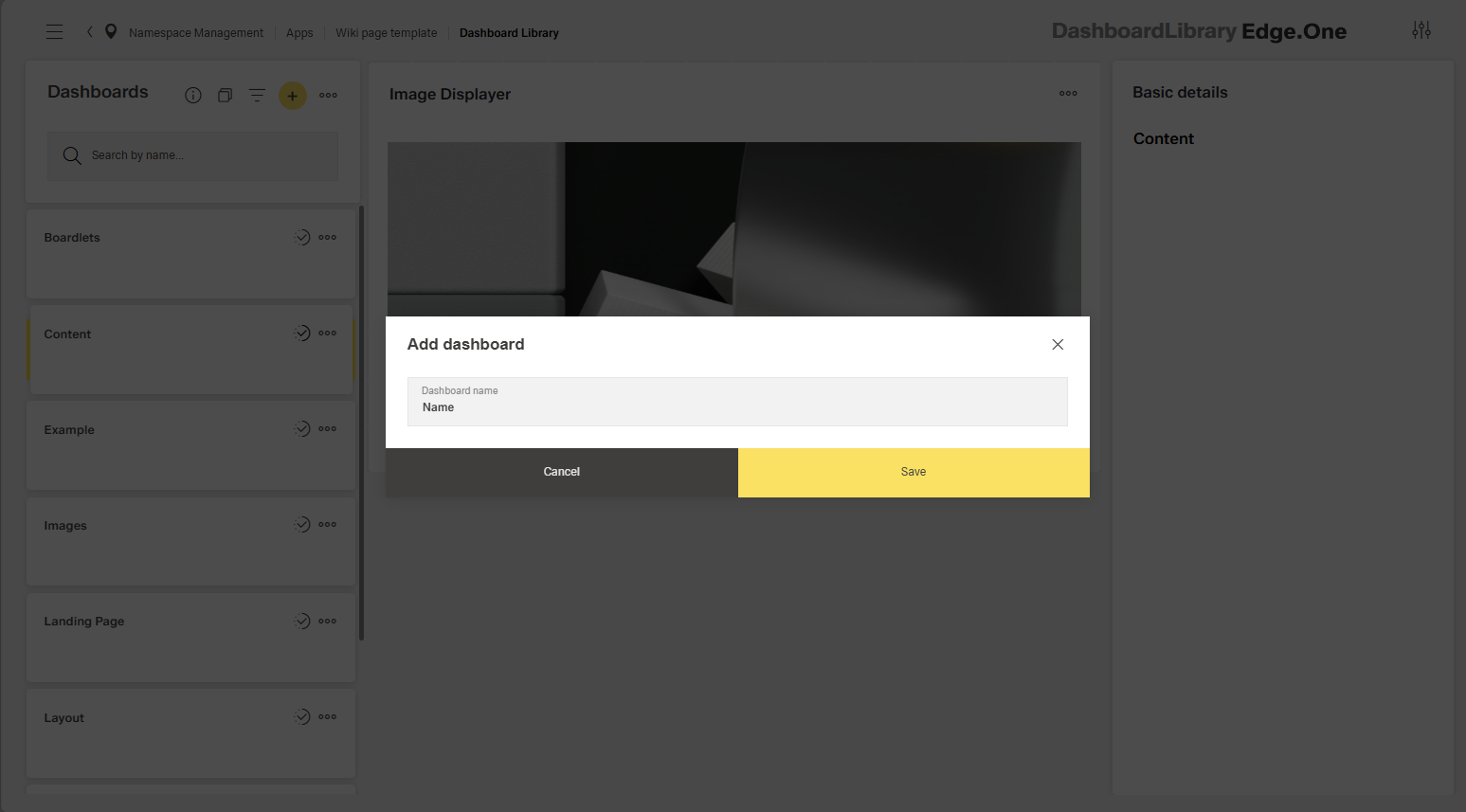
After saving, the item is opened in the Dashboard Editor for configuration.
Multi-select Mode
Multi-select mode can be enabled using the multi-select icon (double checkboxes).
When enabled, multiple dashboards can be selected and batch actions become available in the panel More menu:
- Export selected — Exports the selected dashboards as a file.
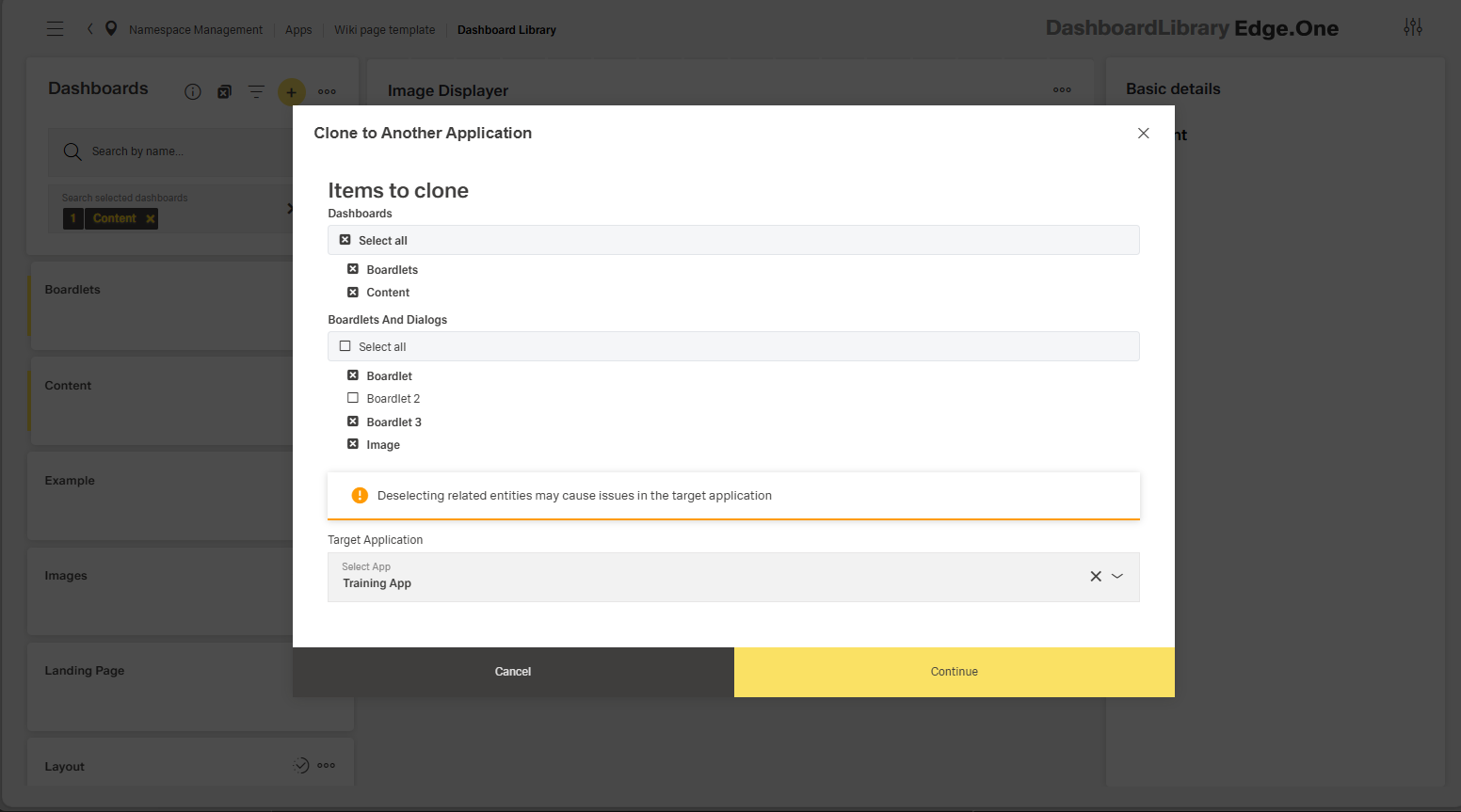
- Clone to app — Opens a dialog to clone the selected dashboards to another app.
- Delete selected — Deletes the selected dashboards after confirmation.
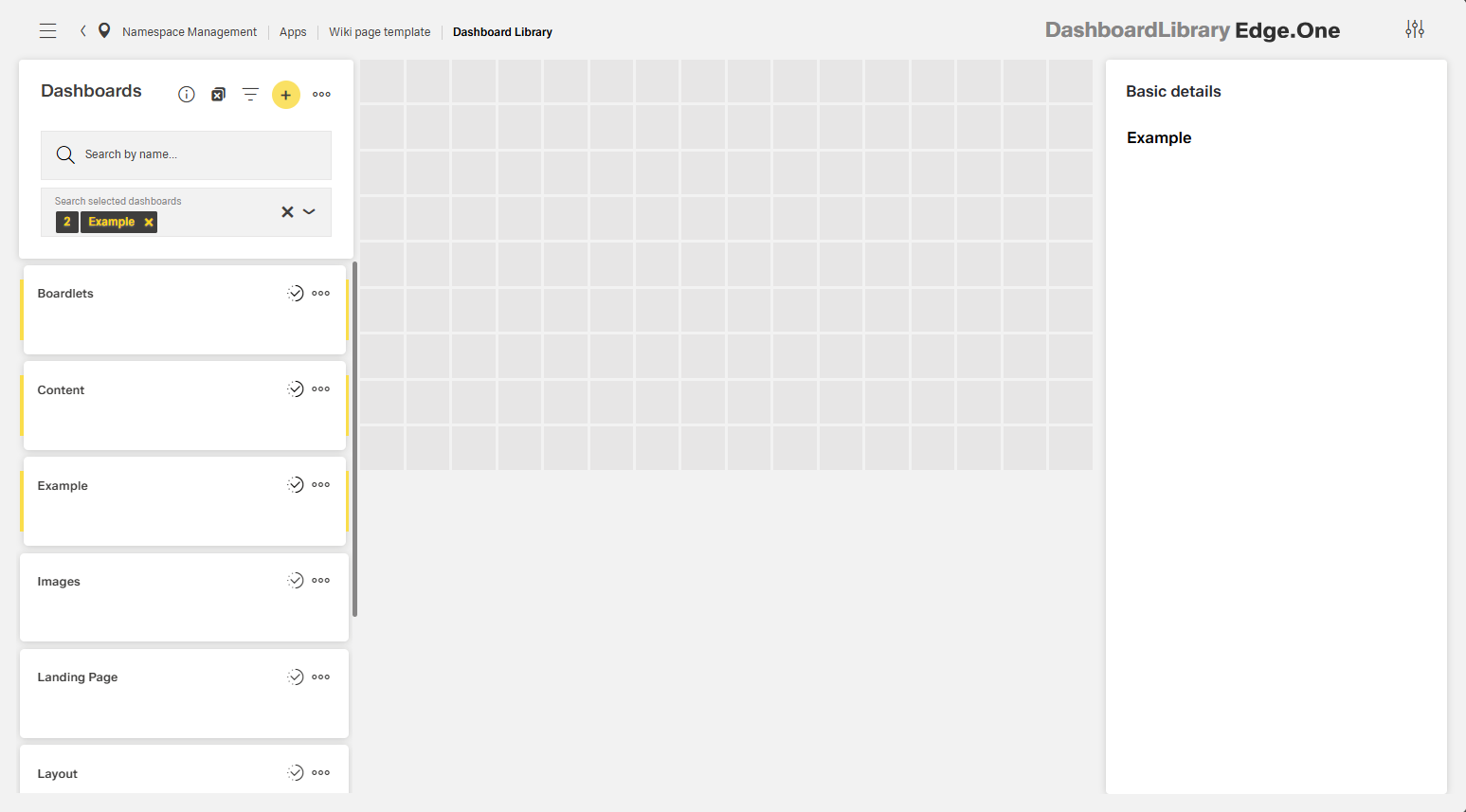
Exporting Dashboards
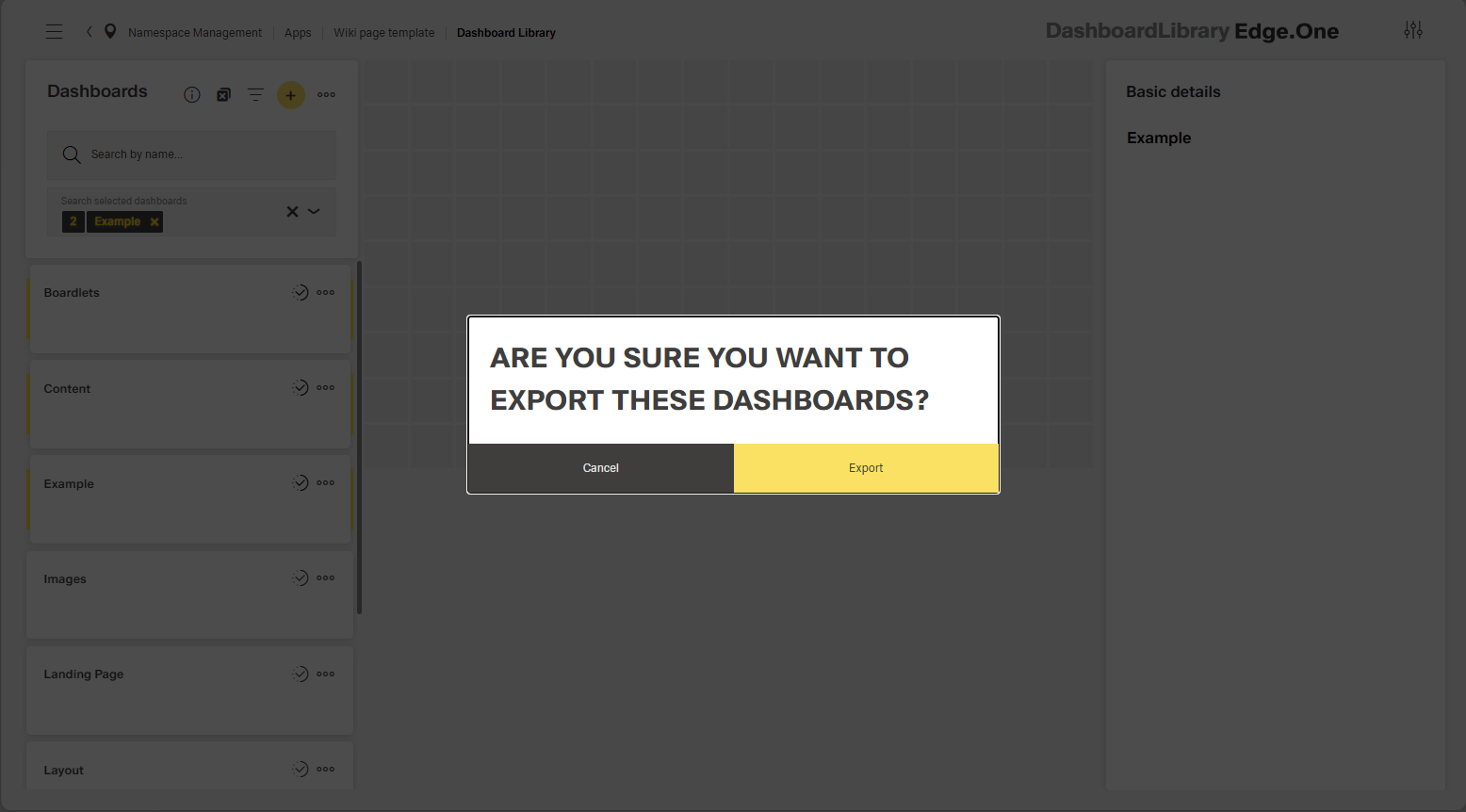
A dashboard export is saved as a JSON file. To export a single dashboard, open the card More menu and select Export dashboard. To export multiple dashboards, select the dashboards to export,then open the More menu on the Card Collection and select Export selected.
Cloning to another App
In the cloning dialog, the selection can be adjusted by deselecting previously selected dashboards. An option is available to also clone connected data sources. A target app is selected in the dropdown. Once selected, the process is confirmed using the primary action.
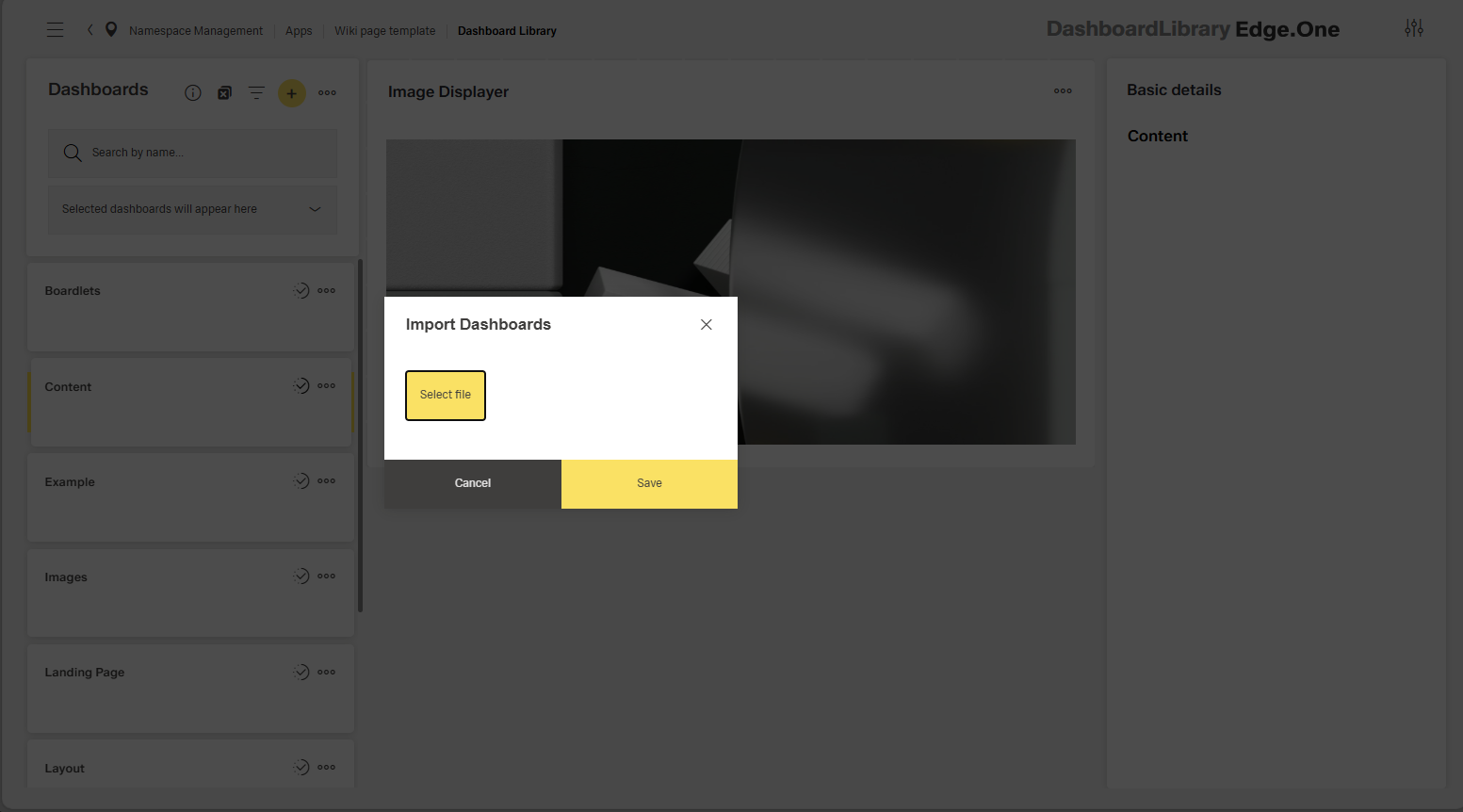
Importing Dashboards
To import ddashboards, click the "More" menu in the top right of the panel. Choose the import option. Select the file of a previously exported dashboard inside the file sytem and confirm the selection,
Dashboard Cards
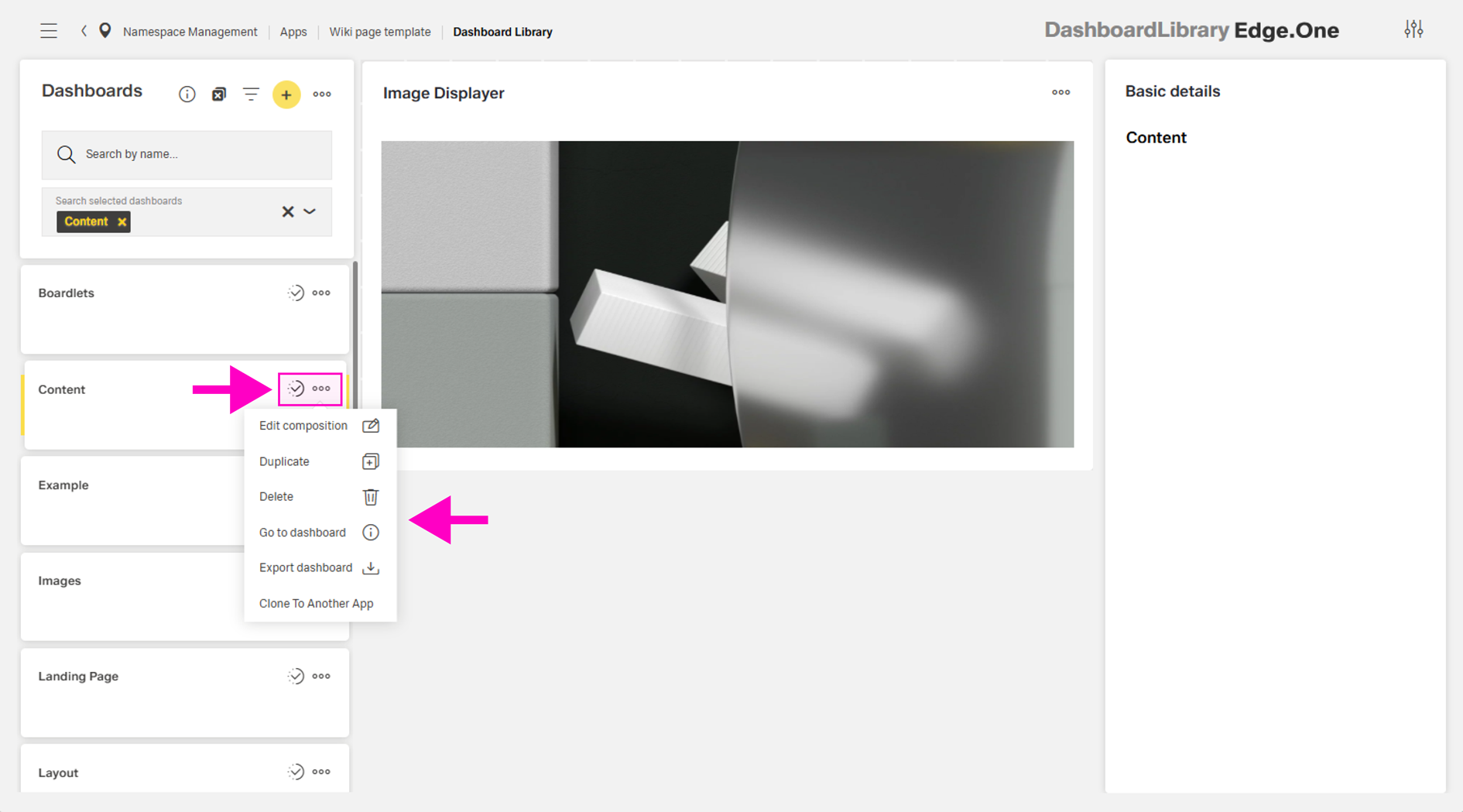
Each boardlet is displayed as a card showing its title. Clicking on a card selects the dashboard, displays its preview in the center, and shows its details on the right panel
The More menu on each card provides the following actions:
- Edit composition - Opens the dashboard in the dashboard editor to modify layout and boardlets.
- Duplicate - Creates a copy of the dashboard, including all boardlets.
- Delete - Opens a confirmation dialog to deleat the dashboard.
- Go to dashboard – Navigates directly to the dashboard view.
- Export dashboard – exports the dashboard as a JSON file.
- Clone to another app - Opens a dialog to clone the selected dashboard to another app.
When an item is currently being edited by another user, a progress icon is shown on the card. Hovering over the icon displays a tooltip with the editor’s name.
Dashboard Preview
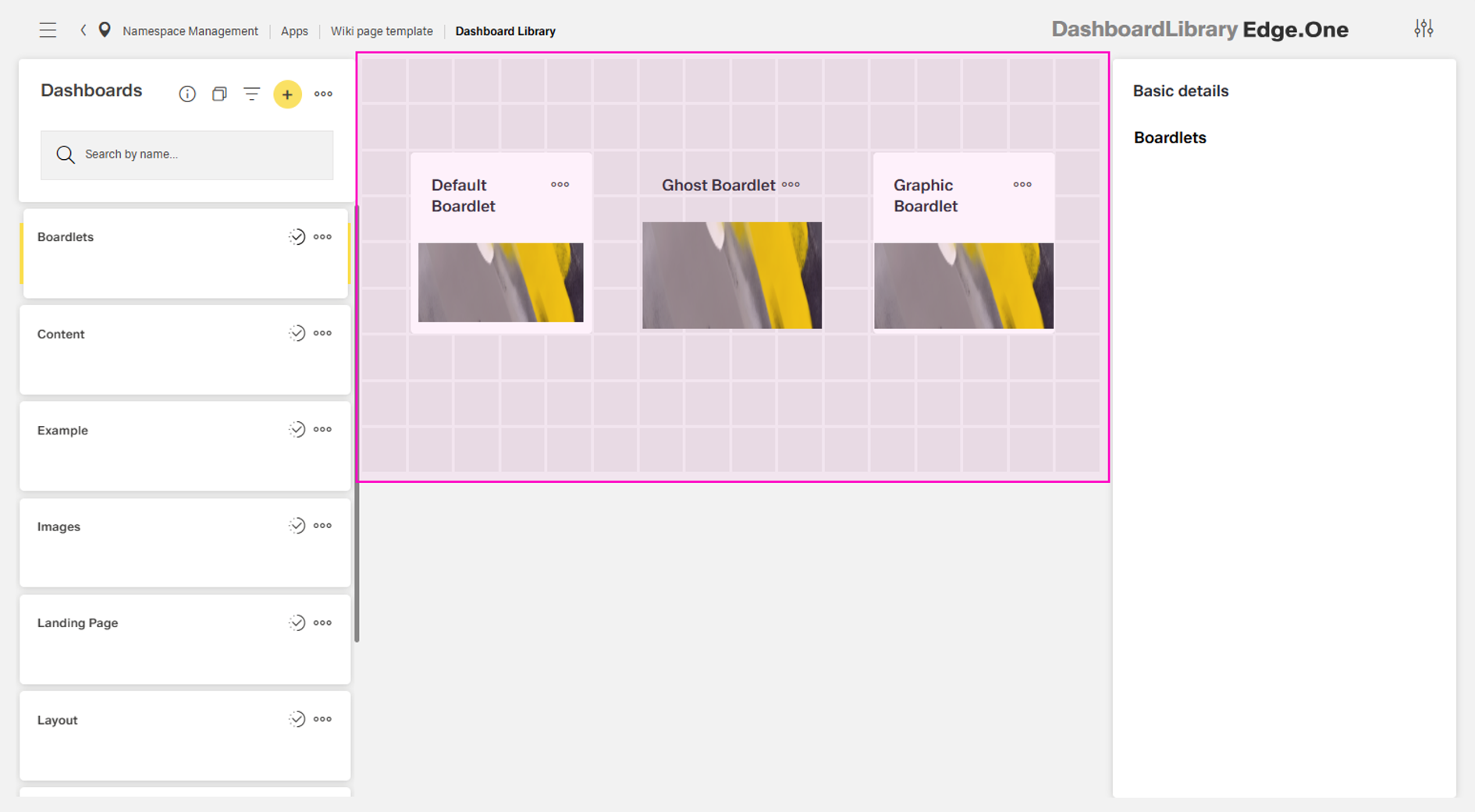
The preview space displays a static, non-interactive preview of the selected dashboard. The layout and boardlets are shown as they would be rendered, without editing or interaction. This helps you understand the structure and content of the dashboard without opening the editor.
Basic Details
The panel on the right shows basic metadata about the selected dashboard. This curretnly only includes the dashboard title.